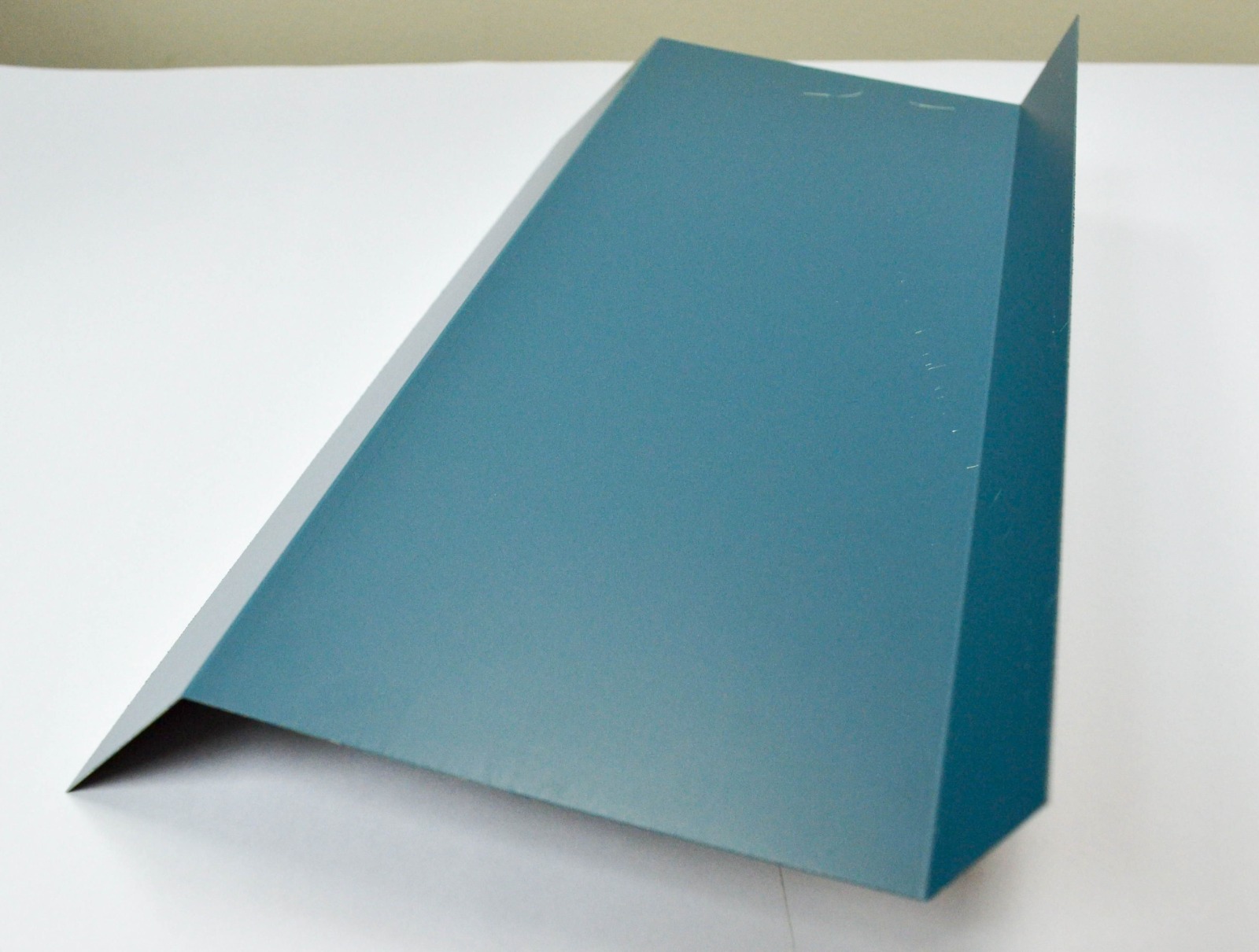
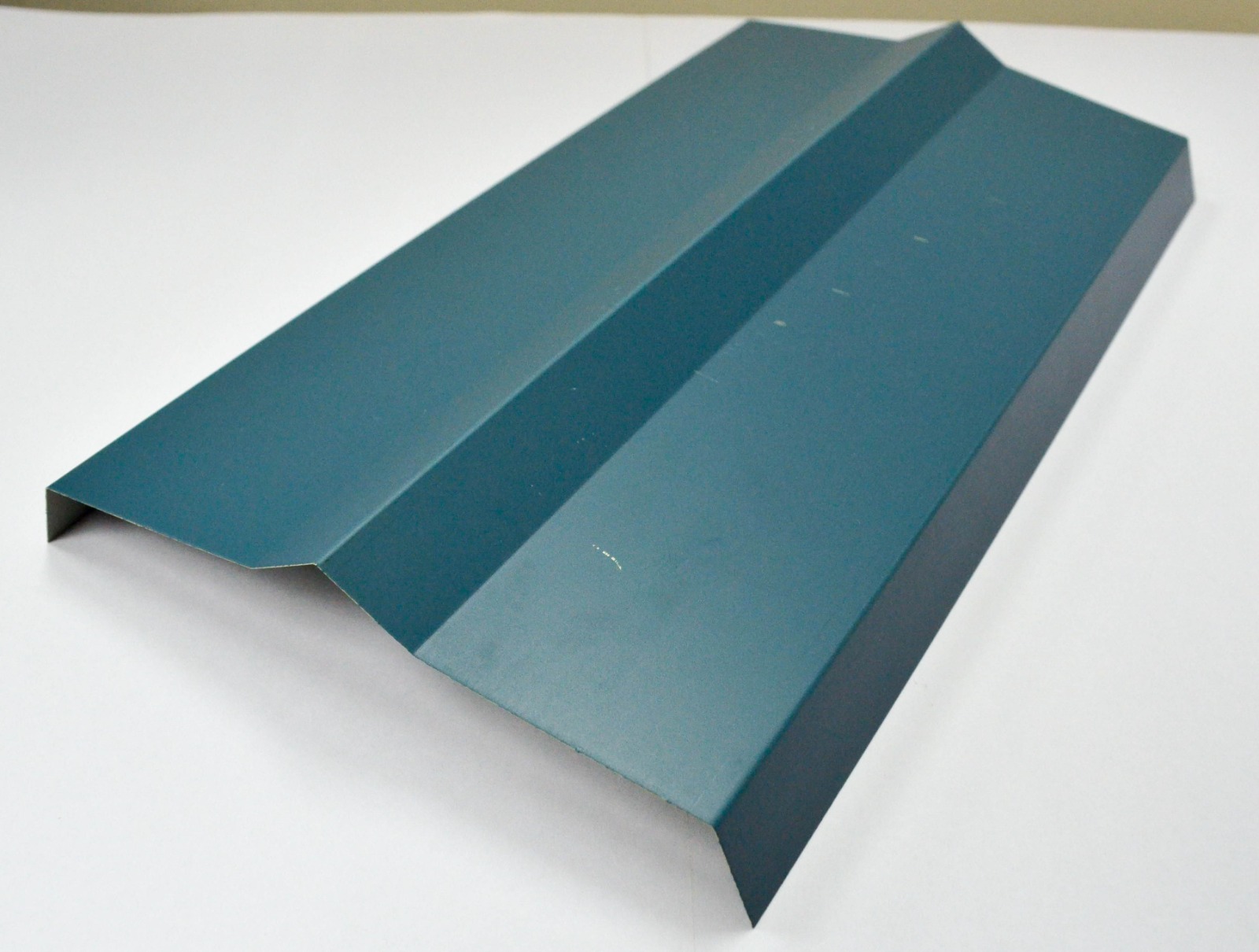
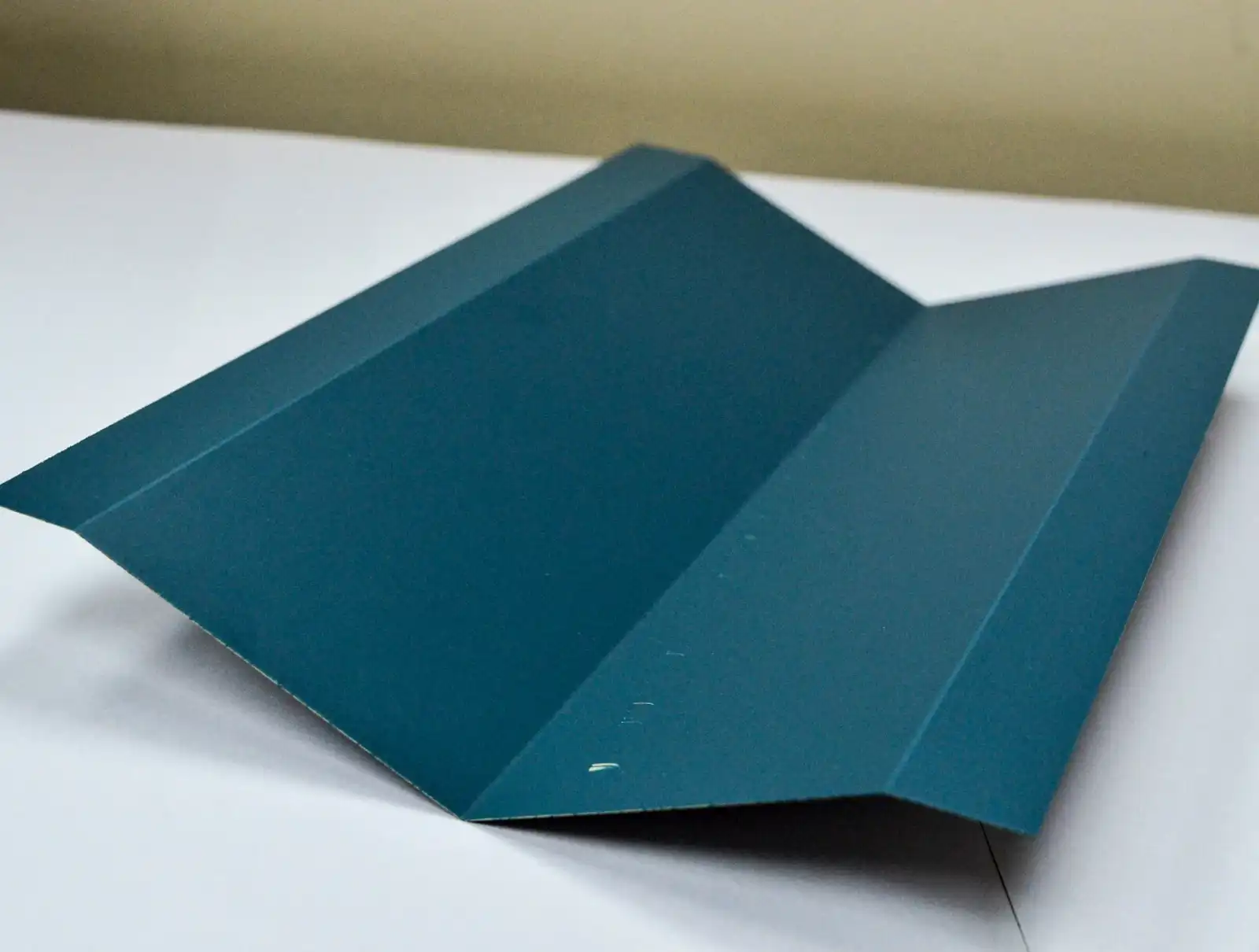
Flashing helps complete the roof and wall system by covering joints, edges, ridges, corners, and transitions. It plays an important role in directing water away and improving the overall finish of the installation.
Hip Flashing — Used at the hip (sloped ridge) of a roof to cover and seal the junction where two sloping roof planes meet at an angle.
Valley Gutter — Installed in the valley (internal angle) between two roof slopes. Channels rainwater runoff down and away from the junction.
Ridge-Cap B — Covers and seals the ridge (top horizontal line) of a roof. Protects the peak from water ingress and gives a clean finished ridge line.
Corner-Cap — Fitted at external wall or roof corners to protect the junction and provide a neat, weather-resistant finish at exposed corners.
Longitudinal Flashing — Runs along the length of a roof or wall edge. Used at eave edges, parapet tops, or wall-to-roof transitions to seal the horizontal junction.
Custom Flashing — Project-specific profiles are available. Contact our team with your requirements.
Flat Hem for a Cleaner and More Durable Finish
Where project requirements call for a neater edge treatment, Flat Hem can be incorporated into the flashing design.
Benefits of Flat Hem
Enhanced strength — reinforces the sheet metal edge for added durability
Cleaner appearance — creates a more refined and even surface finish
Better edge concealment — helps cover rough edges and burrs for a tidier result
Properly detailed flashing supports wet weather performance in both roofing and wall cladding applications, while also contributing to a more complete and professional finish.
Swan Swee offers standard flashing profiles and can also customise flashing details to suit specific project requirements.